
 Software Engineer · SDE-2
Interpract
I started building Interpract to prepare for interviews myself. Then I wondered if I could turn that idea into something people could actually practice with.
Practice that feels like the real thing.
I wanted interview preparation to feel more like an actual interview. So I built a small product around one loop.
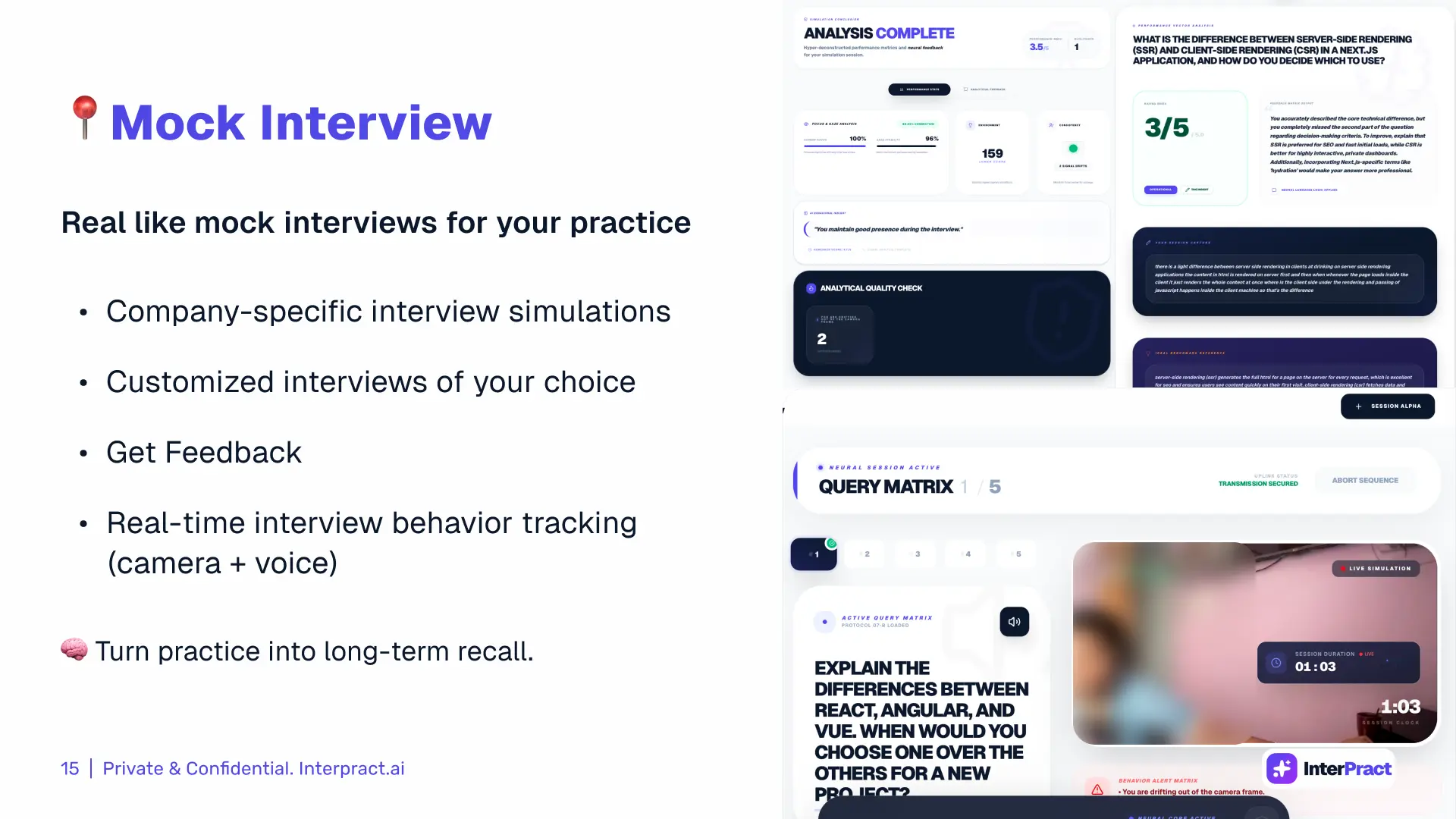
Interpract could generate interview questions, run a mock interview, and give structured feedback on the answers — so each round of practice told you something about the next one.
- 01Question
- 02Answer
- 03Feedback
- 04Improve
Three parts that made it work.
- 01
Interview flow
A mock interview is a sequence, not a form. The flow had to move from question to answer to the next question and keep track of where the candidate was, so the session felt like one conversation instead of separate screens.
- 02
Question generation
Questions were generated for the interview being practiced rather than pulled from one fixed list, so two sessions didn’t have to look the same.
- 03
Feedback
Answers were evaluated and turned into structured feedback at the end of a session, so the result was something you could act on next time — not just a score.
Something I wanted for myself.
It started as something I wanted for myself. Building it made me think more carefully about what actually makes interview practice useful — and how much of that experience can be turned into software.